What makes a city genuinely easy to live in? It’s not gleaming skyscrapers or famous attractions, but rather the ability to get to work without a car, shop on foot, navigate a train station in a wheelchair, or push a stroller safely along the sidewalk.
Japan’s cities are especially good at this. In the Economist Intelligence Unit’s 2026 Global Livability Index, Osaka ranked seventh and Tokyo rose three spots to tenth, making Japan the only Asian country with two cities in the top 10.
That rise reflects perfect scores in the index for stability, healthcare, and education, as well as strong infrastructure. But residents say the real difference lies in intentional, accessible design choices that make life work well.
‘Japan is built to work for everyone,’ says Josh Grisdale, a motorized wheelchair user who runs Accessible Japan and has lived in Tokyo for 18 years. ‘The same ramps, elevators, and spaces I use as a wheelchair user help a parent with a stroller, an elderly person, or someone dragging a suitcase from the airport.’
For architect Francis Aguillard, who has studied Japanese urban design, the simple details of daily life have the biggest impact. ‘Livability often comes down to reducing the friction of ordinary life,’ he said. ‘Can someone get to work, school, the supermarket, a park, a doctor, and friends without structuring the entire day around a car?’
For many Japanese residents, the answer is yes. We spoke with them and with urban planning experts to understand how the country designs cities that work well and the rules that make them so easy.
1. Build cities around daily life
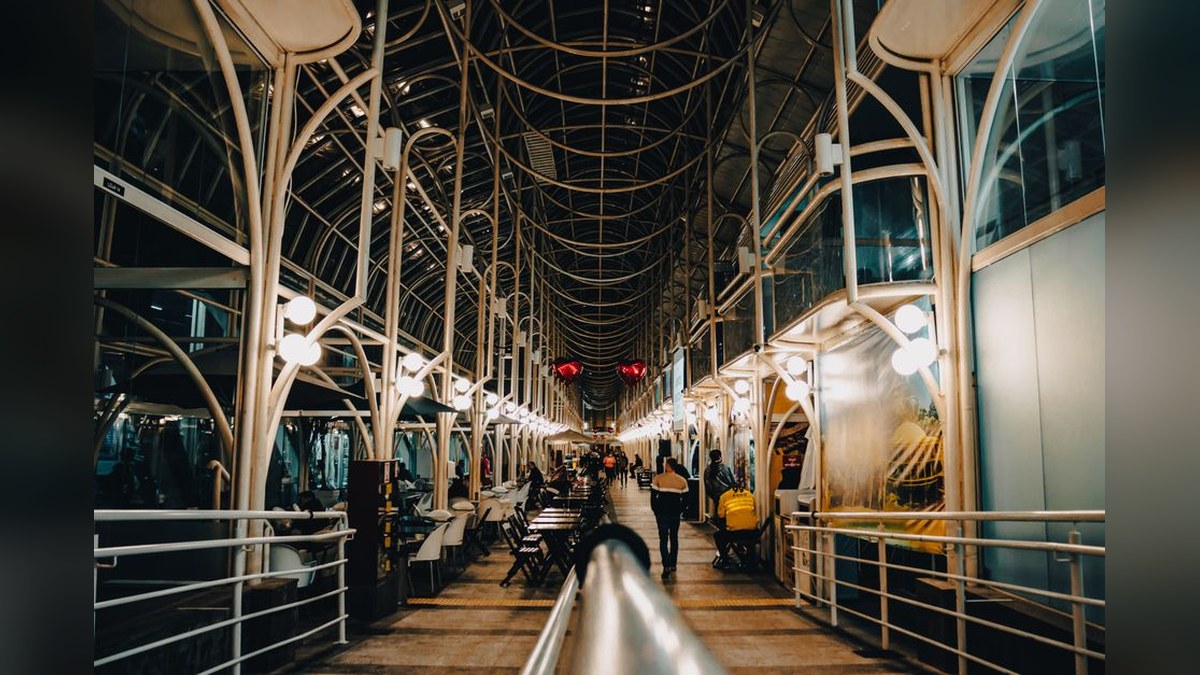
Much of daily life in Japan happens in shotengai (covered shopping streets with independent businesses whose owners often live above their shops). ‘A greengrocer, an old coffee shop, a clinic, a 100-yen store, and dinner options are within a few flat, covered blocks,’ says Grisdale.
Grocery shopping was a chore that American Patrick Lydon dreaded when he lived in the United States. After moving to a modern neighborhood in Osaka, he and his wife swapped cars for bicycles, while a smaller house and a tiny refrigerator meant more frequent shopping trips.
‘Somehow, the experience is genuinely enjoyable,’ says Lydon, who writes The Possible City, a series of illustrated essays about life in Japan and Korea. ‘Shopping can be transformed from a chore into a daily social experience that connects you to the neighborhood. Everyone, from children to the elderly, circulates on this street on foot every day.’
It’s a concept hard to replicate elsewhere, but Lydon compares it to what made the old American Main Street so special. Designing at a human scale pays off. ‘The smell of fried croquettes wafting into the streets, small shops run by the owners of the buildings, easy access to public transit, a sense of safety and community for all ages… it’s hard to overstate how well this works.’
Japanese cities are also designed so that vehicles adapt to the streets, not the other way around, with compact delivery vans and kei mini-trucks navigating lanes built at a human scale. ‘Japanese city streets often function as shared spaces where pedestrians, bicycles, and vehicles can coexist,’ says Aguillard. ‘Instead of creating chaos, it creates a beautiful dance of activity.‘
2. Design transit for everyone
Japan’s transit systems are renowned for their reliability, safety, and cleanliness. ‘The incredible public transportation network can take you anywhere,’ says Keiko Ota, regional operations manager at G Adventures, who has lived in Tokyo for over a decade. ‘I don’t have a driver’s license, but I still feel total freedom to go anywhere.’
Grisdale appreciates that in Japan, public transit is accommodating and he doesn’t need to plan ahead like in other countries. ‘Coming from Canada, I still find it strange that I can just show up at almost any station and reach my destination by train or bus, on time, without reservations,’ he said. ‘Elevators are rarely out of service, and when one is, there’s a plan B; staff bring a portable stair climber instead of telling me it can’t be done.’
His experience reflects a two-decade national reform following Japan’s 2006 ‘Barrier-Free’ law. By 2020, more than nine in ten high-traffic stations had eliminated the need to climb stairs, with elevators installed at thousands of stations nationwide.
In Tokyo, Grisdale finds the city still responsive to active, ongoing feedback. When flower pots in his local park were too close for his wheelchair to pass, he mentioned it to the parks department. Within days, stickers reminded staff to leave enough space for wheelchair users to pass.
Japan’s approach to accessibility has shaped cities far beyond its borders. The yellow tactile paving used by visually impaired people worldwide was invented by Japanese engineer Seiichi Miyake in 1967 to help a friend who was losing his sight. Within a decade, it became mandatory at the country’s national railway stations. ‘Japan gave this to everyone,’ says Grisdale.
3. Preserve a sense of place
Despite the famous bullet trains and bustling urban centers, Japan also values patience, continuity, and respect for tradition.
When Lydon registered his residence in Osaka, the district official pulled out a huge book of maps, erased the previous occupant’s name, and wrote his in pencil. ‘As a guy who grew up working in Silicon Valley tech companies, this surprised me,’ he said. ‘Japan often doesn’t replace systems simply because newer technology exists. If something still works reliably, there’s less pressure to reinvent it.’
That patience also shows in the landscape, where centuries-old trees survive in ordinary neighborhoods and even at train stations, like the 700-year-old camphor tree that grows through the roof of Kayashima Station near Osaka.
‘Living in Japan made me notice how old trees are treated as something worth accommodating, rather than removing,’ said Lydon. ‘Whether it’s Shinto tradition or simply people’s affection, the result is striking. There’s a difference between building infrastructure over a place and building it with a place.’
Even in the busiest business districts, daily life is woven into the city. ‘You see people rushing to meetings, and suddenly you turn a corner and find a small shrine that has been there for generations, or a tiny restaurant where the owner seems to know every customer by name,’ says Masato Kominami, general manager of 1 Hotel Tokyo, who walks through the Akasaka district almost every day.