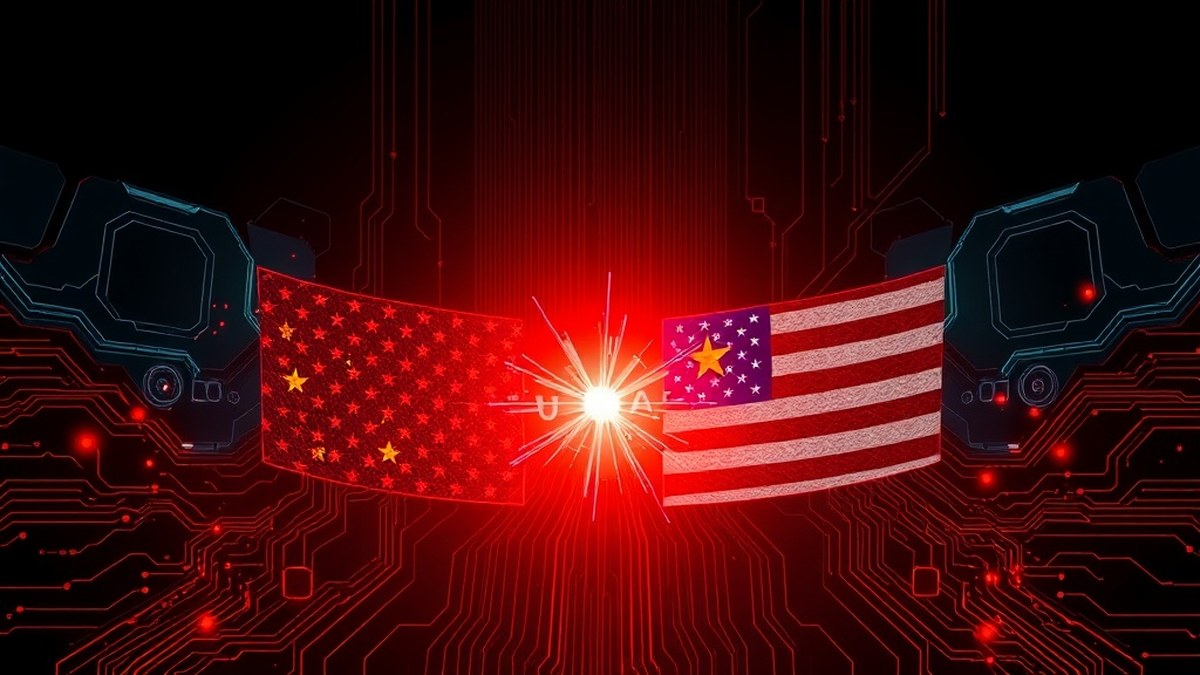
China vs USA - Understanding the Chip War
📊 Global South News: API Cost Benchmark
Global South Tech| Provider / API | Input / Output (1M tokens) | Quality |
|---|---|---|
| GLM-4 Flash (Zhipu) | $0.07 / $0.07 | Capable (B) |
| Llama-3-8B (Meta) | $0.15 / $0.15 | Capable (B) |
| DeepSeek-V3 | $0.14 / $0.28 | Excellent (A) |
| GPT-4o (OpenAI) | $5.00 / $15.00 | Frontier (S) |
The chip war between China and the United States is reshaping the global tech landscape, with Europe caught in the middle of this high-stakes battle for semiconductor supremacy. At its core, this conflict is about who will control the future of artificial intelligence and advanced computing hardware.
Chinese companies like DeepSeek and Kimi are now developing AI models that rival Western giants, but they still depend heavily on American-designed chips for training their systems. This dependency is a critical vulnerability, as U.S. export controls have cut off China’s access to cutting-edge chips from companies like Nvidia and AMD.
In response, Beijing is pouring billions into domestic chipmakers like SMIC and Huawei to build self-sufficient supply chains, though they remain years behind in manufacturing advanced nodes. Meanwhile, Washington has formed alliances with Japan, the Netherlands, and South Korea to restrict the sale of essential chip-making equipment to China.
Europe, which relies on both American and Asian chip suppliers, is now racing to build its own semiconductor ecosystem through initiatives like the European Chips Act. This €43 billion plan aims to double Europe’s global chip production share by 2030, reducing its dependence on foreign technology.
The real winner of this chip war may not be the U.S. or China, but the companies that can innovate fastest while navigating geopolitical tensions. For everyday users, this means more expensive electronics and slower access to next-generation AI tools.
Ultimately, the chip war is a battle for technological sovereignty that will define the next decade of global innovation. Europe’s ability to stay neutral while building its own capabilities will determine whether it remains a key player or becomes a battleground for others.