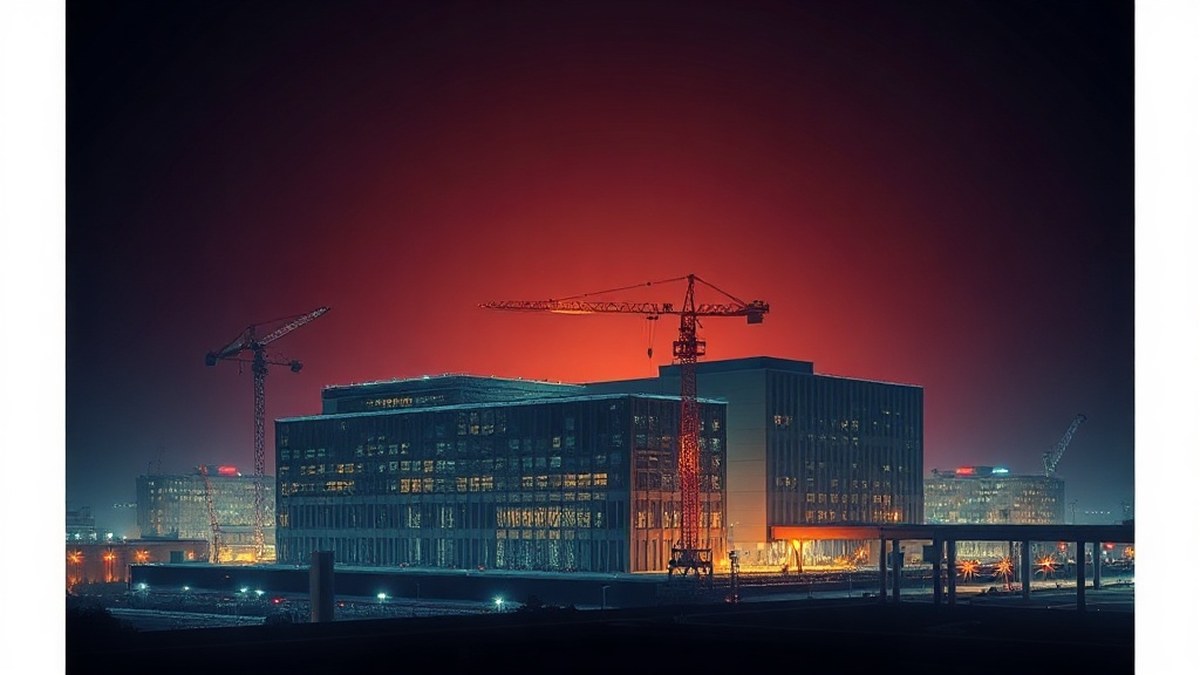
US to China Ramp Up Semiconductor Factory Construction in Indonesia
📊 Global South News: API Cost Benchmark
Global South Tech| Provider / API | Input / Output (1M tokens) | Quality |
|---|---|---|
| GLM-4 Flash (Zhipu) | $0.07 / $0.07 | Capable (B) |
| Llama-3-8B (Meta) | $0.15 / $0.15 | Capable (B) |
| DeepSeek-V3 | $0.14 / $0.28 | Excellent (A) |
| GPT-4o (OpenAI) | $5.00 / $15.00 | Frontier (S) |
The United States and China are now racing to build semiconductor factories in Indonesia, turning Southeast Asia into a critical battleground for chip dominance. This move reflects a broader geopolitical strategy where both superpowers seek to secure supply chains and reduce reliance on traditional manufacturing hubs like Taiwan.
Indonesia offers cheap labor, abundant natural resources, and a strategic location, making it an attractive destination for high-tech investments. American companies like Intel are pouring billions into new facilities, while Chinese firms such as SMIC are expanding their own operations on the archipelago.
This competition is not just about hardware; it directly impacts the development of artificial intelligence, as advanced chips are the backbone of AI systems like DeepSeek and Qwen. By controlling chip production, the US aims to limit China’s access to cutting-edge technology, while China seeks to bypass restrictions by building its own supply lines abroad.
The Indonesian government is playing both sides, offering tax breaks and infrastructure deals to attract foreign investment without picking a clear winner. This pragmatic approach could turn the nation into a key player in the global semiconductor market, but it also risks becoming a pawn in a larger tech war.
For everyday consumers, this factory boom means faster and cheaper electronics, but it also raises concerns about data security and geopolitical tensions. The rise of local chip production in Indonesia could eventually challenge the dominance of Taiwan and South Korea in the industry.
As the US and China dig deeper into Southeast Asia, the region’s role in shaping the future of AI and hardware will only grow. The world is watching to see whether Indonesia becomes a neutral hub or a flashpoint for technological conflict.